
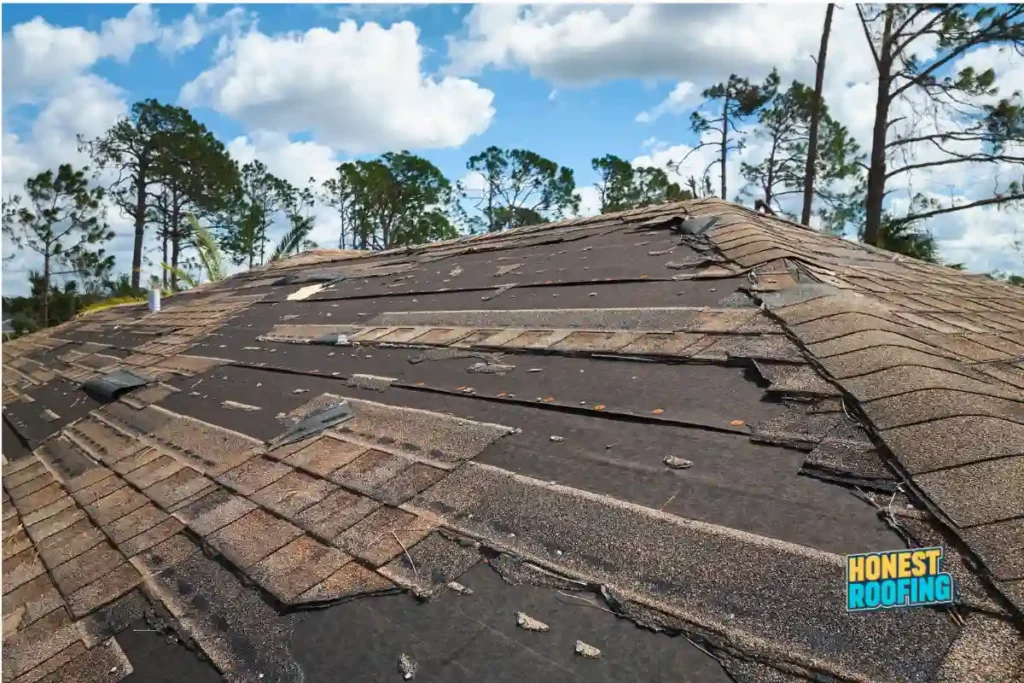
Honest Roofing provides emergency roof repair and residential roof repair services across Pennsylvania, serving homeowners in Trappe, Collegeville, and throughout Montgomery County with same-day and next-day storm damage assessment, temporary tarp installation, shingle repair, flashing repair, and insurance documentation support. Roof repair after storm damage in Pennsylvania in 2026 requires both immediate action to prevent secondary water damage and an honest professional assessment to determine whether the situation calls for a targeted repair or signals a broader problem with the roof system.
A storm came through. Maybe last night, maybe a week ago. Water appeared on the ceiling this morning and you are standing in the kitchen trying to figure out how serious it is, whether you need someone today, and whether to call the roofer or the insurance company first. The information you need is specific and practical, and this article gives it to you in the right order.
In this article:
What should you do immediately after storm damage to your Pennsylvania roof?
After storm damage to a Pennsylvania roof, take these steps in order: stay out of rooms with active ceiling leaks, document all visible damage with photos before touching anything, place buckets or towels to contain interior water, call an emergency roof repair contractor before contacting your insurer, and cover any obviously exposed areas with a tarp only if it can be done safely from ground level. Do not attempt to climb the roof yourself in wet or windy conditions.
Most of the mistakes Pennsylvania homeowners make after storm damage happen because they try to assess or fix things before a professional has looked at the full picture. The instinct to climb up and see how bad it is, to start cleaning up the ceiling damage, or to call the insurance company first are all understandable. They are also all counterproductive. Here is the right order.
Step 1: Stay out of rooms with active ceiling leaks
A ceiling that is visibly sagging or actively dripping is holding an unknown volume of water above it. That load can cause the ceiling to fail without warning, and the volume is impossible to estimate from below. Move everyone out of that room, close the door, and do not go back in until a professional has assessed the situation. This is a structural safety issue, not a cosmetic one, and treating it as the latter is how people get hurt.
Step 2: Document everything before cleanup starts
Walk through the property and photograph every sign of damage immediately, before anything is moved, cleaned up, or repaired. Water staining on ceilings, fallen ceiling material, and any exterior damage visible from the ground all of it. Photos taken within hours of the storm are significantly more useful to an insurance adjuster than photos taken after cleanup has started, because cleanup removes evidence that the adjuster uses to assess the full scope of the event. This documentation is the foundation of any storm damage insurance claim in Pennsylvania. The Pennsylvania Insurance Department publishes specific consumer guidance on what homeowners should document after storm events and how to navigate the claims process.
Step 3: Contain interior water without starting repairs
Buckets, towels, and plastic sheeting can limit how far interior damage spreads while you wait for a professional assessment. This is containment, not repair. Do not attempt to patch or seal anything on the roof surface yourself until a contractor has assessed the full extent of the damage. Sealing a small visible entry point while a larger compromised area exists elsewhere is a common mistake that delays proper diagnosis.
Step 4: Call a roofing contractor before you call your insurer
This sequence matters more than most homeowners realise. An emergency roof repair contractor can install a temporary tarp to stop further water entry and produce a professional written damage assessment that becomes part of your insurance claim file. Calling the insurer first without that professional documentation typically leads to a slower, more contested claims process because you are relying entirely on the adjuster’s assessment rather than having an independent professional record of the full damage scope.
Step 5: Cover exposed areas only if safe from ground level
If a storm has created an obvious gap that is visible from the ground, and you have a tarp and someone to assist, covering that gap stops additional rain from entering. The safety boundary is ground level. If reaching the exposed area requires a ladder or walking on the roof surface, wait for the contractor. Wet roofing materials are extremely slippery, and injuries from falls after storm events are far more common than they should be.
How do you know if your roof needs repair or if this is the beginning of a replacement conversation?
A repair is appropriate when the damage is contained to a specific identifiable section, the roof is under 18 to 20 years old, and the rest of the system is structurally sound. A replacement assessment becomes necessary when the same section has been repaired multiple times, when widespread granule loss or shingle deterioration is visible beyond the storm-damaged area, or when the decking underneath shows moisture damage that indicates the storm was the latest in a series of infiltration events rather than the first. Honest Roofing provides a written assessment of both the storm damage and the surrounding roof condition before recommending repair or replacement.
This is the question most homeowners want answered before they commit to either option. The honest answer is that some storm damage events reveal a straightforward repair situation, and some reveal that the roof has been quietly developing a problem that the storm simply made visible. Knowing which situation you are in changes everything about the financial decision that follows.
When a repair is clearly the right call
A straightforward roof repair situation has a few recognisable characteristics. The damage has a single identifiable cause: wind-lifted shingles, a branch impact, a failed flashing seal at a penetration. This is the first time this section of the roof has needed attention, or at least the first time in several years. The shingles in the surrounding area look sound with no significant granule loss or surface deterioration beyond the immediately damaged section. And the roof is under 15 to 18 years old, meaning it has meaningful serviceable life remaining if the specific failure is addressed correctly. A repair in this situation fixes the problem. It does not paper over a systemic issue.
When the storm damage reveals something bigger
The more complicated situation is where the storm was not the primary cause of the problem but the event that made a pre-existing condition visible. Water entry through storm-damaged shingles that reveals decking moisture damage from slow prior infiltration. A flashing failure at a chimney or pipe boot that has been allowing gradual water movement for months, with the storm finally producing enough volume to become visible inside.
A roof where the storm damaged shingles in one section but a closer look at the surface reveals significant granule loss across a much larger area. In these situations, repairing only the storm-damaged section leaves the underlying condition unaddressed and typically means the same conversation happens again within one to three seasons.
The role of roof age in the repair versus replacement decision
A residential roof under 15 years old with isolated storm damage is almost always a repair situation the roof has significant life remaining and the event was genuinely isolated. A roof over 20 years old where a storm has caused visible failure is more often a situation where replacement planning is the honest recommendation, not because the storm itself requires a full replacement, but because the storm happened to a roof that is already approaching end of its serviceable life.
Repairing that roof is not wrong, but the homeowner should do so with a clear understanding that the repair is buying a year or two rather than resetting the clock on a ten-year horizon. Roof coatings are sometimes a useful intermediate option for a roof with sound decking that is aging but not yet at the point of requiring full replacement.
What does emergency roof repair from Honest Roofing actually involve from the first call to the completed fix?
Emergency roof repair from Honest Roofing in Pennsylvania begins with a same-day or next-day on-site assessment of the full damage scope, temporary tarp installation to stop further water entry while permanent repair is planned, a written damage report formatted for insurance adjuster review, and scheduling of the permanent repair with a clear written estimate and timeline. Most residential roof repairs in Trappe, Collegeville, and the surrounding Montgomery County area are completed within one to three days of the initial assessment depending on the scope and material availability.
Here is what that looks like from the homeowner’s side. You call in the morning. A technician arrives, gets on the roof rather than estimating from the driveway, and assesses the damage from above rather than below. Both the visible failure point and any secondary damage the storm may have revealed are documented. A temporary tarp goes down to stop further water entry that day.
A written report is produced that includes dated photographs of each affected area, a description of the damage and its likely cause, and an itemised repair scope. The permanent repair is then scheduled with a specific written estimate covering materials, labour, and any scope that was not visible until the tarp was in place. The homeowner knows what it will cost and how long it will take before anything is signed.
Does Honest Roofing help with the insurance claim documentation for storm damage roof repair?
Yes, and this is one of the most practically important things a professional roofing contractor can do after a storm event. The written damage report Honest Roofing produces includes the documentation elements that insurance adjusters use to evaluate claims: dated photographs of each affected area, a contractor description of the damage consistent with the reported storm event, the full scope of the repair required, and the material and labour cost breakdown. Having that contractor-prepared report in hand before the adjuster visits consistently produces better claim outcomes than relying on the adjuster’s assessment alone, because it establishes the full damage scope with independent professional documentation before the adjuster makes their determination.
What areas of Pennsylvania does Honest Roofing serve for emergency roof repair?
Honest Roofing provides emergency roof repair for homeowners in Trappe, Collegeville, Norristown, Lansdale, Pottstown, King of Prussia, and throughout Montgomery County, Pennsylvania. For most addresses in this service area, same-day or next-day response is available for active storm damage situations. If a storm has also affected your gutters or siding, those can be assessed in the same visit so the full exterior picture is documented in a single report. To get started, request a free emergency roof repair assessment and the first step will be an on-site look at what the storm actually did, no commitment required at that stage.
The Most Useful Thing You Can Do Right Now Is Make One Call
The homeowner who has been standing in their kitchen looking at a water stain on the ceiling for the last twenty minutes already knows the answer to most of their questions. Something happened. Water got in. It needs to be assessed by someone who knows what they are looking at. The article gave you the action sequence, the diagnostic framework, and the process clarity. What comes next is simple.
Honest Roofing responds to emergency roof repair requests across Trappe, Collegeville, and Montgomery County, Pennsylvania the same day or next day for most addresses. Contact Honest Roofing and the first conversation will be about what your roof actually needs not about convincing you that the damage is worse than it is.