
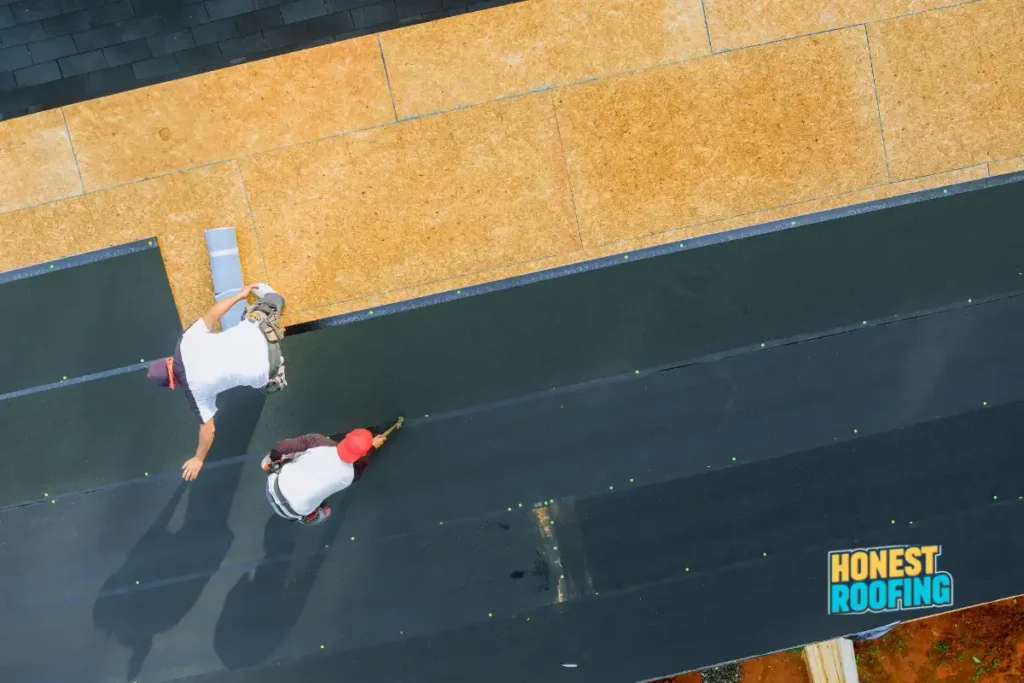
Honest Roofing provides commercial roofing services across Pennsylvania, covering everything from targeted flat roof repairs to complete commercial roofing installations, with written proposals and scheduling coordinated around the operational needs of the building. If you are managing a commercial property in Pennsylvania in 2026 and a roofing decision is on the table, the planning side of this has gotten meaningfully more complex than it was a few years ago.
A commercial roof rarely fails on a schedule that suits anyone. Maybe a tenant reported a leak in the ceiling last week. Maybe you have been tracking a soft spot on the flat roof for two seasons and the last patch is not holding. Maybe the building is simply old enough now that the next full inspection is going to raise the question you have been putting off. Whatever brought you here, the decision is almost never just about the roof. It is about keeping the building operational, managing tenant relationships, and making a capital expenditure that fits the budget cycle rather than arriving as an emergency.
Material costs in the commercial roofing sector have remained elevated since 2022. Lead times on certain membrane systems have stretched. And businesses running out of commercial buildings have less tolerance for operational downtime than they did a few years ago. All of that makes the planning stage more consequential, not more complicated, once you understand what you are actually deciding.
In this article:
What do commercial roofing services actually include and which category does your building fall into?
Commercial roofing services cover the full range from a targeted repair on an existing flat or low-slope membrane system to a complete commercial roofing installation, with the right option depending on the current condition of the roof, its age, and whether the building is existing construction or being built from the ground up.
Most property managers arrive at this conversation having noticed a symptom: a water stain on a drop ceiling, a ponding area that did not drain after the last rain, a membrane seam that has started to lift. The symptom tells you something is wrong. It does not tell you whether you are dealing with a containable repair or a system that has genuinely reached end of life. Those two situations have entirely different cost and timeline profiles, and getting that diagnosis right before a contractor visits changes everything downstream.
What commercial roofing systems are most common on Pennsylvania buildings?
Most commercial buildings use flat or low-slope roofing rather than the pitched shingle roofs typical of residential construction. This is largely a practical decision: flat roofs are more economical at commercial scale and easier to service once installed. The two most widely used membrane types in this part of Pennsylvania are worth understanding before you evaluate any proposal.
EPDM roofing is a synthetic rubber membrane that has been the dominant flat roofing material for several decades. It is durable, flexible in cold temperatures, and relatively cost effective on a per-square-foot basis. Many commercial buildings in Pennsylvania have EPDM systems that are 15 to 20 years old and approaching the end of their useful life.
TPO roofing is a newer heat-welded thermoplastic membrane that has grown in popularity over the past decade primarily because of its energy efficiency. The white reflective surface reduces cooling loads significantly on larger buildings, which affects the total cost of ownership over the system’s lifespan. Both fall under the broader category of low-slope and flat roof systems that Honest Roofing installs and services across the region.
What is the practical difference between a commercial roof repair and a full installation?
A repair addresses a specific, identifiable failure on a system that is otherwise structurally sound and has reasonable life remaining. A flashing failure at a rooftop unit, a puncture from foot traffic, a seam that has pulled apart in a localized area, these are repair situations. A full installation replaces the entire roofing system down to the deck and is the right call when the membrane as a whole has deteriorated beyond the point where targeted repairs reliably hold, or when the building is new construction.
The financial argument for getting this decision right is straightforward. A commercial property that goes through repeated rounds of patch repairs on a membrane that is genuinely at end of life typically spends more over three years than a single timely full replacement would have cost. The assessment visit is what establishes which situation you are actually in.
How do commercial roofing projects differ from residential ones in ways that matter to you operationally?
The scale difference is the obvious starting point. Residential roofing projects on a single-family home rarely involve more than a few squares of material and a one to two day timeline. A commercial flat roof can be tens of thousands of square feet, which changes the crew size, the material quantity, the permitting process, and how many days the work is actually on site. Beyond scale, commercial projects involve scheduling around active business operations, coordinating with tenants on access and noise, and navigating building permit requirements that vary by municipality and building classification in ways that residential projects rarely encounter.
How do you choose the right commercial roofing approach without shutting down your business?
The right commercial roofing approach in 2026 depends on three things working together: how much functional life is genuinely left in the current roof system, how much operational disruption the business can absorb during the project, and where the investment fits in the budget cycle for the property.
This is also the part of the decision where it is worth being specific with any contractor before approving anything. Commercial roofing is a significant capital expenditure, and a general recommendation delivered without a clear rationale is not sufficient grounds for approval.
What questions should you bring to a commercial roofing contractor before signing anything?
Start with timeline. Ask for the realistic project duration and whether that timeline assumes weather cooperates or accounts for delays. Ask directly whether the work can be scheduled around your operating hours, and what the cost implication of phased or off-hours scheduling actually is. Ask what the warranty covers on both materials and the installation labour, because commercial roofing warranties vary considerably by system and manufacturer. And ask specifically what happens if the crew finds additional damage once the membrane comes up, since mid-project scope changes are one of the most common sources of cost overruns on larger commercial jobs. A contractor who has managed projects like yours before will have clear answers to all of these.
What are the practical ways to minimise business disruption during commercial roofing work?
Phased scheduling is the most widely used approach for keeping a building operational during a commercial roofing project. Rather than mobilising the entire roof at once, the crew completes one section fully before moving to the next. This keeps parts of the building accessible and limits the noise and access disruption to a defined area at any given time. The tradeoff is that phased work typically extends the overall project timeline, so the conversation about phasing needs to happen before scheduling is confirmed rather than after.
Off-hours work is another option, particularly for buildings with retail or customer-facing operations during normal business hours. Early morning starts, evening shifts, and weekend scheduling all carry a cost premium, but for some tenants or businesses, that premium is worth it compared to the operational impact of daytime noise and crew access.
According to commercial roofing industry guidance from the National Roofing Contractors Association, property managers who involve the roofing contractor in access and scheduling planning from the beginning of the project consistently report fewer mid-project surprises than those who treat scheduling as a separate conversation after the contract is signed. If something urgent develops mid-project, our emergency roofing services are available to address it promptly so an open section does not become a liability.
What does a commercial roofing project actually look like from the first assessment to the final walkthrough?
A commercial roofing project moves from an on-site assessment and written proposal, through scheduling coordinated around the building’s operational requirements, to installation and a joint final walkthrough before the job is declared complete.
Knowing the general structure ahead of time makes the planning conversation significantly easier, particularly for a property manager going through a commercial roofing project for the first time or at a new property.
What does the sequence from assessment to a finished commercial roof actually look like?
It starts with a physical on-site assessment of the existing roof system, not an estimate from satellite imagery or photos alone. The technician documents the current membrane condition, identifies any areas of active failure or early deterioration, checks drainage and flashing details, and assesses the deck condition where accessible. A written proposal follows within a reasonable timeframe, breaking down materials, labour, an estimated project duration, and any phasing or scheduling considerations specific to the building’s operations.
Once the contract is signed, scheduling is confirmed in writing with specific dates and a clear plan for how the crew will work around building access and operating hours. Communication during the installation covers scope changes, timeline shifts due to weather, and any findings that affect the original proposal. Most commercial installations in Montgomery County run anywhere from three days for a smaller building to several weeks for a large multi-section flat roof, depending on system type and whether phasing is involved.
The job ends with a walkthrough of the completed work with the property manager before the crew leaves the site, and warranty documentation is provided on completion. When the assessment stage is the right starting point, request a free commercial roofing quote and that visit comes with no obligation attached.
What does a realistic commercial roofing situation actually look like in practice?
A property manager at a small commercial building in the Trappe area contacts Honest Roofing after the third maintenance call in 14 months for a ceiling stain in the same general section of the building. The roof is around 18 years old with an original EPDM membrane. The assessment finds that the patched areas are holding locally, but granular wear across a wider section of the membrane and several seam separations suggest the system is in its final years rather than experiencing isolated failures.
At that point, two options are on the table. A full membrane replacement addresses the root problem and resets the clock on the system’s lifespan. Alternatively, silicone roof coatings applied over a structurally sound but aging membrane can extend the roof’s functional life by several years, buying the building time to schedule a full replacement on the property’s own budget cycle rather than under emergency conditions. Which option makes sense depends on the deck condition, the timeline the business is working within, and whether the budget cycle supports a capital replacement this year or next. That conversation is what the assessment is for.
The planning questions in this article apply to any commercial roofing project in Pennsylvania in 2026, regardless of building size, system type, or where the current roof is in its lifespan. Getting the diagnosis right before committing to an approach is the most important step.
Honest Roofing provides free commercial roofing assessments across Trappe, Collegeville, and Montgomery County, PA. Reach out at callhonestroofing.com/contact/ and the first conversation will be about what your building actually needs, not about moving you toward a specific scope before anyone has looked at the roof.