
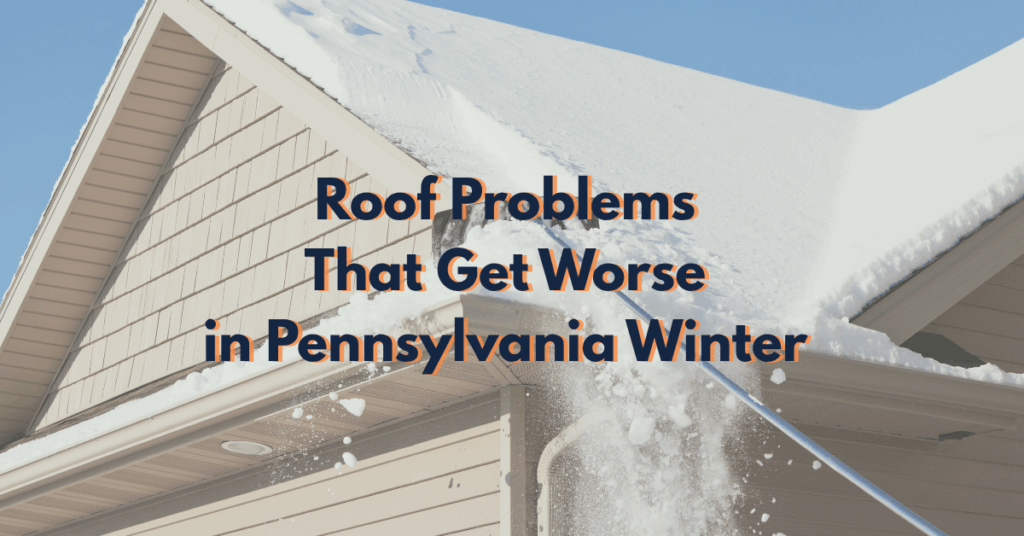
Here’s what most Pennsylvania homeowners don’t realize: winter doesn’t just test your roof—it weaponizes existing problems.
According to the Insurance Information Institute, winter storm damage accounts for billions in property damage annually, and roofing issues are among the most expensive claims.
But here’s the good news: most winter roof disasters are completely preventable if you know what to look for and take action before the first hard freeze!
We’re breaking down the five most common roof problems that transform from minor annoyances into major catastrophes during Pennsylvania winters.
Problem #1: Small Leaks Become Major Water Damage
That tiny drip you noticed during the last rainstorm? Winter is about to make it your worst nightmare.
Here’s why small leaks are exponentially more dangerous in winter: water expands when it freezes. When moisture seeps into even the smallest crack or gap in your roofing system, freezing temperatures cause that water to expand by about 9%. This expansion acts like a crowbar, forcing cracks wider and creating new pathways for even more water intrusion.
It’s a vicious cycle that accelerates throughout the winter. A hairline crack in October becomes a quarter-inch gap by January, and by March, you’re dealing with rotted decking, damaged insulation, and potentially mold growth in your attic.
What makes it worse in winter: The freeze-thaw cycle is relentless in Pennsylvania. Temperatures regularly hover around freezing, meaning water thaws during the day, seeps deeper into cracks and crevices, then freezes solid at night and expands. This happens dozens of times throughout the winter, progressively worsening damage with each cycle.
Snow accumulation on your roof also adds hydrostatic pressure, forcing melted water into any available opening. Even a pinhole leak can channel significant amounts of water into your home when there’s two feet of snow sitting on your roof slowly melting from the warmth of your attic.
The cost: A small leak that could be fixed for a few hundred dollars in fall often results in thousands in water damage by spring. We’re talking damaged ceilings, ruined insulation, compromised electrical systems, and potential mold remediation—all because water had months to infiltrate your home’s structure.
What you can do now: Schedule a thorough roof inspection immediately if you’ve noticed any signs of moisture. Look in your attic for water stains, feel for damp insulation, and check for any discoloration on your ceilings. Even if you think it’s “just a small drip,” address it before winter arrives in full force. A small repair now can save you from a massive insurance claim later!
Problem #2: Ice Dams Can Destroy Your Roof and Gutters
Ice dams are Pennsylvania’s winter roof nemesis, and if you’ve never dealt with one, consider yourself lucky—so far.
An ice dam forms when heat from your attic melts snow on your roof. That melted water runs down toward the eaves, where temperatures are below freezing, and refreezes into a ridge of ice. As more snow melts and runs down, it hits this ice barrier and backs up under your shingles, creating pools of standing water that seep into your home.
The problem is, ice dams don’t just appear overnight. They develop gradually, and existing roof vulnerabilities make them far more likely and far more destructive.
What makes it worse in winter: If your roof already has poor ventilation, inadequate insulation, or damaged shingles, you’re essentially guaranteed to develop ice dams. Poor attic ventilation means heat escapes through your roof deck, creating the perfect conditions for the melt-freeze cycle that causes ice dams.
Damaged or missing shingles give ice dams an easy pathway into your home. Once water backs up behind the ice, it will find and exploit every weakness in your roofing system. What starts as a small ice ridge can quickly become a massive dam that weighs hundreds of pounds and tears your gutters completely off your home.
The cost: Ice dam damage is expensive and extensive. We’re talking destroyed gutters, damaged fascia boards, water infiltration into walls causing interior damage, ruined insulation, and potential structural damage to roof eaves.
Beyond the immediate damage, there’s also the emergency service premium. When you call for help in the middle of winter with water pouring into your home, you’re paying emergency rates because contractors know you’re desperate.
What you can do now: First, ensure your attic insulation and ventilation are adequate. Proper attic ventilation keeps your roof deck cold, preventing the melt that causes ice dams. Second, clean your gutters thoroughly before winter—clogged gutters are ice dam magnets. Third, address any damaged or missing shingles immediately, as these weak points will be exploited when ice dams form.
Consider having a professional assess your attic ventilation before winter. Adding ridge vents, soffit vents, or improving insulation now can prevent ice dams all winter long. It’s an investment that pays for itself by preventing one major ice dam event!
Problem #3: Missing or Damaged Shingles Allow Snow and Ice Infiltration
A few missing shingles might seem like no big deal in September. By February, those missing shingles can mean disaster.
Shingles are your roof’s first line of defense against the elements. When even a small section is compromised, your underlayment and roof deck are exposed. While underlayment provides some protection, it’s not designed to be your primary barrier—especially not against sustained winter conditions.
What makes it worse in winter: Snow doesn’t just sit on your roof—it actively works its way into any available opening. Wind-driven snow can penetrate horizontal gaps that rain would never reach. As temperatures fluctuate, snow melts during warmer periods and that water seeks the path of least resistance—right through those missing shingle areas.
Once moisture penetrates past your shingles, it saturates your underlayment and eventually reaches your roof deck. Wet wood in freezing temperatures undergoes rapid deterioration. Rot develops faster, structural integrity weakens, and before you know it, you’re looking at extensive deck replacement, not just new shingles.
Wind speeds increase in winter, and damaged shingles that might have held on during summer breezes can be ripped away entirely by winter gales. What started as two or three missing shingles in fall can become a dozen missing shingles by midwinter, exponentially increasing your exposure.
The real cost: Replacing a few shingles costs a few hundred dollars. Replacing a rotted section of roof deck, damaged underlayment, and compromised insulation costs thousands. The longer those shingles remain missing through winter, the more expensive your eventual repair becomes.
There’s also the hidden cost of energy loss. Missing shingles mean compromised insulation, which means your heating system works harder to maintain comfortable temperatures. That translates to higher utility bills all winter long.
What you can do now: Walk around your property and visually inspect your roof from the ground. Look for obvious bare spots, areas where shingles look different from the surrounding areas, or visible gaps. If you’ve had recent storms, be especially vigilant—wind damage might not be immediately obvious from inside your home.
Schedule a professional roof inspection if you suspect any damage. A qualified roofer can safely walk your roof (conditions permitting) and identify vulnerable areas that need attention before winter weather arrives. Those repairs might feel like an inconvenience now, but they’re nothing compared to the emergency repairs you’ll need if you wait!
Problem #4: Inadequate Attic Ventilation Leads to Moisture and Ice Problems
Most homeowners never think about their attic ventilation—until winter exposes just how inadequate it is.
Proper attic ventilation serves two critical purposes: it removes excess heat in summer and removes moisture in winter. When ventilation is insufficient, warm, moist air from your living space gets trapped in your attic. In winter, this creates a perfect storm of problems.
What makes it worse in winter: In winter, your home produces more moisture than any other season. Cooking, showering, doing laundry, even breathing—all of this adds humidity to your indoor air. That moisture rises into your attic, and without proper ventilation to remove it, it condenses on cold surfaces.
This condensation is insidious. It saturates insulation, reducing its effectiveness and adding weight to your ceiling structure. It promotes mold and mildew growth. And critically, it keeps your roof deck warmer than it should be, contributing to the snow-melt that causes ice dams.
Poor ventilation also means uneven roof temperatures. You’ll have warm spots that melt snow and cold spots where it refreezes, creating the exact conditions for ice dam formation. It’s like your inadequate ventilation is actively conspiring to damage your roof!
The real cost: Moisture damage from poor ventilation can be extensive and expensive. Saturated insulation loses its R-value and needs complete replacement—that’s several thousand dollars right there. Structural damage from prolonged moisture exposure can require major repairs.
There’s also the compounding effect on other winter roof problems. Poor ventilation makes every other issue on this list worse. It accelerates ice dam formation, worsens leaks, and increases the likelihood of snow infiltration through damaged areas.
What you can do now: Have a professional assess your attic ventilation before winter. They should check for proper soffit vents (intake), adequate ridge or roof vents (exhaust), and ensure your insulation isn’t blocking airflow. The general rule is one square foot of ventilation for every 150 square feet of attic space.
Look for signs of inadequate ventilation yourself: frost on the underside of your roof deck in winter, musty odors in your attic, compressed or damp insulation, or mold growth on wood surfaces. Any of these signs means you need ventilation improvements now, before winter intensifies the problem.
Adding or improving ventilation is typically a straightforward process that can be completed in a day or two, and the benefits extend far beyond just winter protection—you’ll also enjoy lower cooling costs next summer!
Problem #5: Clogged Gutters Cause Water Backup and Structural Damage
It’s easy to dismiss gutter cleaning as routine maintenance, but clogged gutters in winter are a serious threat to your entire roofing system.
Gutters exist to channel water away from your roof and foundation. When they’re clogged with leaves, debris, or even old roofing granules, water has nowhere to go. In fall, this means overflow that damages your fascia and landscaping. In winter? It means ice, and lots of it.
What makes it worse in winter: When clogged gutters fill with water and temperatures drop, that water freezes solid. Now you have a gutter full of ice that weighs significantly more than your gutter system was designed to handle. This weight pulls gutters away from your fascia boards, creating gaps between your roof edge and your gutters.
Those gaps are perfect entry points for water and ice. Once ice starts forming behind your gutters, you’ve essentially created a man-made ice dam that will only grow throughout the winter. The ice backs up under your shingles, finds its way into your roof deck, and causes extensive damage.
Clogged gutters also prevent proper drainage during winter thaws. When temperatures rise and snow melts, all that water needs somewhere to go. If your gutters are clogged or ice-filled, water backs up onto your roof or overflows and pools against your foundation—both scenarios that lead to expensive damage.
What you can do now: Clean your gutters thoroughly before the first hard freeze. Remove all leaves, debris, and built-up sediment. Flush your downspouts to ensure they’re completely clear. While you’re at it, inspect your gutter hangers and brackets—make sure everything is secure and properly attached to your fascia.
Consider installing gutter guards if you’re tired of frequent cleaning. While they’re an upfront investment, quality gutter guards significantly reduce the debris that accumulates and make winter maintenance much easier.
If your gutters are already showing signs of damage or sagging, don’t wait until spring to address it. Damaged gutters will only get worse under winter’s weight and stress. Replace or repair them now while conditions are favorable for installation work!
The Time is Now
The time to act is right now. Not after the first major snowstorm. Not when you notice water stains spreading across your ceiling. Not when your gutters are literally falling off your house under the weight of ice.
Right now, while conditions are still favorable for repairs and while you can address problems on your terms rather than in emergency mode.
Think about it this way: would you rather spend a few hundred to a few thousand dollars on preventive repairs and maintenance now, or would you rather spend five to ten times that amount on emergency repairs in the middle of winter, plus deal with the stress, disruption, and damage to your home?
Your Winter Roof Protection Checklist
Before winter arrives in full force, make sure you’ve addressed these critical items:
✅ Schedule a professional roof inspection to identify any existing damage or vulnerabilities
✅ Repair all leaks immediately, no matter how small they seem
✅ Replace missing or damaged shingles before winter weather worsens the problem
✅ Clean gutters and downspouts thoroughly, ensuring complete drainage
✅ Assess attic ventilation and insulation, making improvements where needed
✅ Inspect and repair flashing around chimneys, vents, and roof penetrations
✅ Check soffits and fascia boards for damage that needs attention
✅ Document your roof’s condition with photos for insurance purposes ✅ Identify a reliable emergency roofing contractor before you need one
Don’t wait for winter to reveal your roof’s weaknesses. Take control now and protect your home, your family, and your investment!