
How Attic Ventilation Affects Your Roof’s Lifespan
In this comprehensive guide, we’re breaking down exactly what insulation R-values Pennsylvania homes need, why proper ventilation matters as much as insulation, how these systems work together, and the warning signs that your attic needs attention now.
Understanding R-Value: What It Means and Why It Matters
R-value measures thermal resistance—how effectively insulation slows heat transfer. Higher R-values mean better insulation performance and greater energy savings.
The R-value basics: The “R” stands for resistance to heat flow.
An R-30 rated insulation resists heat transfer twice as effectively as R-15. R-60 provides twice the thermal resistance of R-30.
Gaps, compression, and moisture damage can drastically reduce effectiveness; a fiberglass batt rated R-19 might only perform like R-11 if squished between studs or installed improperly.
This is critical to understand: the R-value on the insulation package assumes perfect installation.
Real-world performance often falls short due to compression around obstacles, gaps between batts, air leaks bypassing insulation entirely, and moisture reducing insulation effectiveness.
Pennsylvania’s recommended R-values: For exterior walls, R-13 to R-23 is typical, while R-30, R-38, and R-49 are common for ceilings and attics.
Pennsylvania falls into Climate Zone 5, where current energy codes recommend R-49 for attic floors (the insulation on your attic floor between joists).
Many older Pennsylvania homes have just R-19 to R-30 in attics—adequate when installed decades ago but woefully insufficient by modern standards. The difference between R-30 and R-49 might not sound dramatic, but it represents 40-50% better thermal performance and substantial energy savings.
Different insulation types achieve R-values differently: Fiberglass batts provide about R-3.2 per inch of thickness, blown fiberglass delivers approximately R-2.5 per inch, cellulose (recycled paper) offers around R-3.5 per inch, and spray foam insulation ranges from R-3.5 to R-6.5 per inch depending on type.
To achieve R-49 in your attic, you need roughly 15-16 inches of blown fiberglass, 14 inches of cellulose, or 8-13 inches of spray foam depending on type. Most Pennsylvania attics can accommodate these depths without issues.
Why Proper Insulation Matters for Pennsylvania Homes
Adequate attic insulation delivers multiple critical benefits that save money and protect your home.
Energy cost savings: Heat rises. Without sufficient insulation, warmth from your living space escapes through your ceiling into the attic and out through your roof.
In winter, your heating system works overtime replacing that lost heat. In summer, superheated attics radiate warmth down into your living space, forcing air conditioners to work harder.
Upgrading from R-19 to R-49 can reduce heating and cooling costs by 30%. For Pennsylvania homeowners spending $3,000 annually on heating and cooling, that’s $900 saved every year—savings that continue for decades.
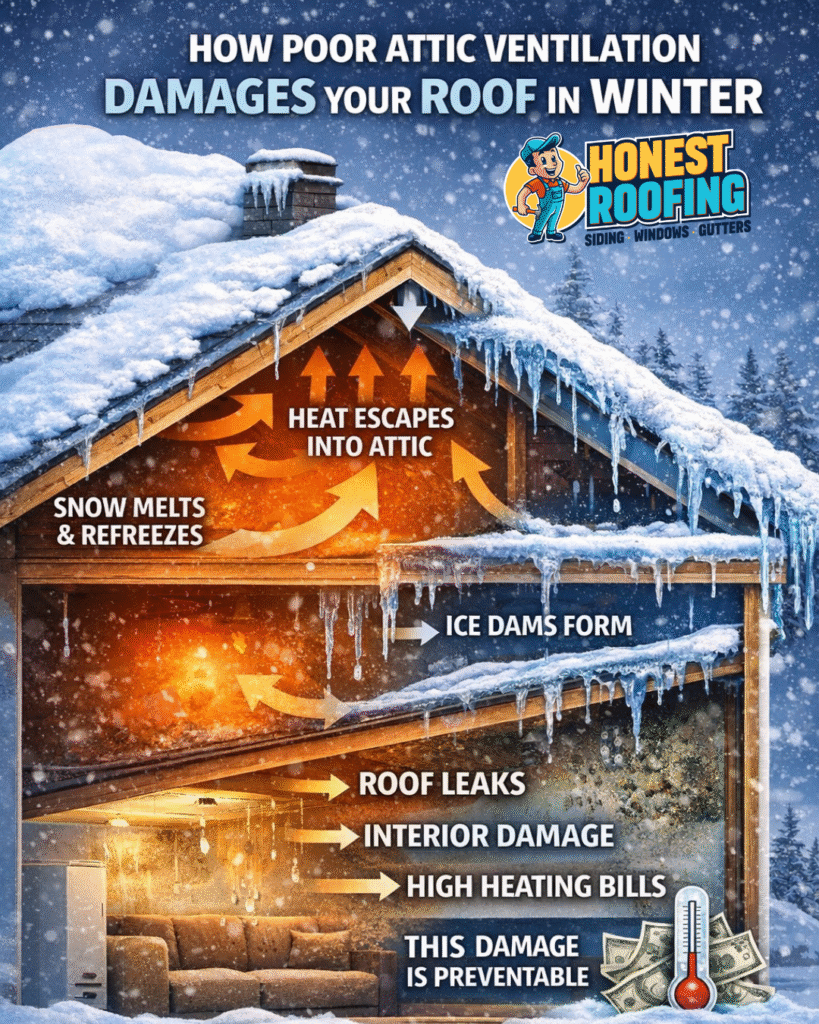
Ice dam prevention: Ice dams form because heat escaping through inadequate insulation warms your roof deck, melting snow that refreezes at cold roof edges. Proper insulation keeps heat in your home where it belongs, maintaining a cold roof deck that prevents the melt-freeze cycle creating ice dams.
Combine R-49 insulation with proper air sealing, and ice dams become rare occurrences rather than annual nightmares.
Extended roof lifespan: Inadequate insulation allows heat to build up in your attic, accelerating shingle aging.
Asphalt shingles rated for 30 years can fail at 20 years when subjected to excessive attic heat.
Proper insulation maintains cooler attic temperatures, helping your roof achieve its full expected lifespan.
Improved comfort: Rooms directly below poorly insulated attics are difficult to heat in winter and cool in summer.
Upgrading insulation creates more consistent temperatures throughout your home, eliminating hot and cold spots that make living spaces uncomfortable.
Moisture control: Working in tandem with ventilation, proper insulation creates temperature barriers that reduce condensation risks.
This prevents mold growth, wood rot, and the structural damage that moisture causes over time.
Attic Ventilation Explained: Why Your Roof Needs to Breathe
Even perfect insulation fails without proper ventilation working alongside it.
How attic ventilation works: Ventilation systems create airflow that removes heat and moisture from attic spaces. Intake vents at soffits (roof overhangs) allow cool outside air to enter the attic, while exhaust vents at the ridge or roof surface allow hot air to escape.
This continuous airflow maintains attic temperatures close to outdoor temperatures.
Why ventilation matters: In summer, unventilated attics can reach 140-160°F, radiating heat downward into living spaces and cooking your roof shingles from below.
In winter, warm, moist air from your living space inevitably reaches the attic. Without ventilation to remove it, that moisture condenses on cold surfaces, causing mold growth, wood rot, and insulation degradation.
Year-round, proper ventilation extends shingle life by reducing temperature extremes, prevents ice dams by maintaining cold roof decks, removes moisture that compromises insulation and structure, and reduces energy costs by preventing heat buildup.
The balanced ventilation principle: Effective attic ventilation requires balanced intake and exhaust. Half your ventilation area should be intake vents (soffits), and half should be exhaust vents (ridge, gable, or roof vents). This balance creates proper airflow patterns that ventilate your entire attic space.
Common problems include blocked soffit vents from insulation pushed too far into eaves, inadequate total ventilation area for attic size, exhaust-only vents without adequate intake, and mixing ventilation types (like ridge vents and powered fans) that disrupt airflow patterns.
How much ventilation do you need? The general rule: 1 square foot of net free ventilation area per 150 square feet of attic space, split evenly between intake and exhaust. A 1,500 square foot attic needs 10 square feet of total ventilation—5 square feet of soffit intake and 5 square feet of ridge exhaust.
The Critical Relationship Between Insulation and Ventilation
These two systems must work together—getting one right while neglecting the other creates new problems.
Why both matter equally: Insulation without ventilation traps heat and moisture in your attic, causing mold, rot, and premature material failure.
Ventilation without insulation removes moisture but does nothing to prevent heat loss that drives up energy bills and causes ice dams.
The common mistake: Many homeowners add insulation to save energy but inadvertently block soffit vents in the process, eliminating intake ventilation. This creates trapped, stagnant air that defeats the insulation’s purpose by allowing moisture accumulation.
The proper installation sequence: Install ventilation baffles (also called rafter vents) in every rafter bay before adding insulation. These channels maintain clear airflow paths from soffit vents to the attic space. Add insulation to proper R-value depth without blocking ventilation pathways. Ensure insulation doesn’t extend into soffit areas where it would block intake vents.
Air sealing comes first: Before adding insulation, seal air leaks that allow warm, moist air to bypass insulation and enter the attic directly. Common leak points include recessed lighting fixtures, plumbing penetrations, electrical wire holes, attic hatches and pull-down stairs, chimney chases, and bathroom and kitchen fan housings.
Professional air sealing using spray foam or caulk at these locations prevents the moisture infiltration that creates mold and ice dam problems even when insulation and ventilation are adequate.
Warning Signs Your Attic Insulation Needs Upgrading
These indicators signal that your attic insulation is inadequate or damaged.
High and fluctuating energy bills: If your heating and cooling costs have steadily increased, or if your bills spike dramatically with temperature changes, inadequate insulation is likely the culprit.
Compare your bills to similarly sized homes in your area—if yours are significantly higher, insulation may be the issue.
Uneven temperatures throughout your home: Rooms directly below the attic that are difficult to heat in winter or cool in summer indicate insufficient insulation overhead.
Drafty feelings in upper-floor rooms or noticeable temperature differences between floors suggest heat is escaping through your ceiling.
Ice dams forming on your roof: As discussed in our recent ice dam guide, these form when heat escaping through your roof melts snow. If you consistently develop ice dams, inadequate insulation is allowing heat to warm your roof deck.
Visible insulation in your attic is compressed or sparse: If you can see your attic floor joists easily, your insulation is insufficient. Compressed insulation that’s been crushed or compacted has lost much of its R-value. Water-stained or moldy insulation has been compromised and needs replacement.
Attic temperature extremes: Your attic should be close to outdoor temperature. If it’s noticeably warmer than outside in winter or extremely hot in summer, you lack adequate insulation and ventilation.
Warning Signs Your Attic Ventilation Is Inadequate
Poor ventilation creates distinct problems you can identify.
Excessive attic heat in summer: Touch your ceiling on a hot summer day.
If it feels warm or hot, your attic is overheating due to inadequate ventilation.
An attic thermometer showing temperatures 20+ degrees above outdoor temperature indicates ventilation problems.
Moisture, condensation, or frost in winter: Check your attic during cold weather. Moisture on roof decking, frost on nails protruding through sheathing, or damp insulation signal that moisture-laden air isn’t being ventilated away. This moisture comes from your living space and should be removed by proper ventilation.
Mold or mildew growth: Dark stains on attic sheathing, visible mold on wood surfaces, or musty odors indicate persistent moisture from inadequate ventilation.
Premature shingle aging: If your roof shingles are curling, cracking, or showing advanced aging before their expected lifespan, excessive attic heat from poor ventilation is accelerating deterioration.
Blocked or insufficient vents: Walk around your home’s exterior. Can you see soffit vents that appear open and unobstructed? Is there a ridge vent running the length of your roof peak? Absence of visible ventilation or vents covered by paint, debris, or insulation indicate problems.
DIY Assessment: Checking Your Attic Insulation and Ventilation
You can perform a basic assessment yourself to determine if your attic needs professional attention.
Safety first: Only access your attic if you can do so safely via permanent stairs or a sturdy pull-down ladder. Wear a dust mask, gloves, and eye protection. Watch your step—walk only on joists or use boards spanning joists. Never step on insulation or ceiling drywall between joists, as you’ll fall through.
Measuring your current insulation: Take a ruler or tape measure into your attic.
Measure the depth of insulation in several locations. If you have less than 11-12 inches of fiberglass or cellulose, you’re below R-38 and definitely need more.
If you’re at 14-16 inches or less, you’re below the recommended R-49 for Pennsylvania.
Checking insulation condition: Look for compression, gaps, uneven coverage, water stains or mold, and whether insulation blocks soffit vents.
Assessing ventilation: From inside your attic, look for light coming through soffit vents (indicates they’re open), clear airflow pathways from eaves to ridge, ridge vents or other exhaust vents at the peak, and balanced intake (soffit) and exhaust (ridge) ventilation.
From outside, verify soffit vents are visible and unobstructed, ridge vents run the length of your roof peak, and gable or roof vents exist if ridge vents are absent.
When to call professionals: If you’re uncomfortable accessing your attic, find significant moisture or mold, discover major gaps in insulation coverage, are unsure about ventilation adequacy, or plan to upgrade insulation or ventilation, professional assessment ensures you address issues correctly.
Improving Attic Ventilation: Solutions
If your assessment reveals ventilation deficiencies, here are your options.
Ridge vent installation: Ridge vents installed along your roof peak provide continuous exhaust ventilation and are the most effective exhaust option for most homes.
Soffit vent installation or clearing: If soffit vents are absent or inadequate, installing continuous soffit vents provides proper intake. Costs vary widely based on soffit design. Simply clearing blocked existing vents costs nothing except time.
Gable or roof vents: For homes where ridge vents aren’t feasible, gable vents or roof-mounted exhaust vents provide alternatives.
Attic baffles: These inexpensive but critical components maintain airflow channels from soffits to the attic interior.
Powered attic fans: While marketed as ventilation solutions, powered fans often create more problems than they solve by pulling conditioned air from living spaces, increasing energy costs, and disrupting natural ventilation patterns. We generally don’t recommend them unless specific unusual circumstances warrant their use.
Return on Investment: The Financial Case
Upgrading attic insulation and ventilation delivers compelling financial returns.
Energy savings: Pennsylvania homeowners upgrading from R-19 to R-49 insulation typically see 30% reductions in heating and cooling costs.
Avoided damage costs: Preventing ice dams saves money in emergency repairs and interior damage per incident. Extending roof life by 5-7 years delays a costly replacement, saving thousands.
Home value improvement: Energy-efficient homes command premium prices. Documented energy improvements add value and appeal to buyers, making your home more marketable when you sell.
Comfort value: While harder to quantify financially, the improved comfort of consistent temperatures throughout your home is worth something to most homeowners.
Common Mistakes to Avoid
Don’t make these costly errors when upgrading your attic.
Adding insulation without air sealing first: Insulation slows heat transfer, but air leaks bypass insulation entirely. Seal first, then insulate for maximum effectiveness.
Blocking soffit vents with insulation: This destroys your intake ventilation, trapping heat and moisture. Always use baffles to maintain clear airflow paths.
Mixing ventilation types incorrectly: Don’t combine ridge vents with powered attic fans—they work against each other. Choose one system and implement it properly.
Compressing insulation to fit: Compressed insulation loses R-value. If space is limited, use higher R-value per inch materials like spray foam rather than compressing batts.
Ignoring moisture sources: Fix roof leaks, plumbing leaks, and other moisture sources before adding insulation. Otherwise, you’re trapping moisture that causes rot and mold.
Assuming DIY is adequate: While you can add some insulation yourself, professional installation ensures proper air sealing, ventilation preservation, and uniform coverage that DIY rarely achieves.
Conclusion
Your attic’s insulation and ventilation systems work together to control energy costs, prevent ice dams, extend roof life, and maintain home comfort.
Most Pennsylvania homes have inadequate insulation and many lack proper ventilation entirely.
But upgrading is straightforward, delivers fast payback through energy savings, and prevents thousands in damage from ice dams, premature roof failure, and moisture problems.
If your energy bills are high, you develop ice dams regularly, or you’re experiencing uneven temperatures in your home, your attic insulation and ventilation deserve immediate attention.
Don’t let inadequate insulation and ventilation waste your money and damage your home. Take action now to assess your current situation and implement the upgrades your attic needs.
Ready to optimize your attic insulation and ventilation? We provide comprehensive attic assessments and professional insulation and ventilation solutions throughout Chester County, Montgomery County, and all of southeastern Pennsylvania and New Jersey.
Our experienced team will evaluate your current insulation R-value and depth, assess ventilation adequacy and balance, identify air leakage sources requiring sealing, recommend cost-effective improvement strategies, and implement professional installation that delivers maximum performance and energy savings.
Schedule your free attic assessment today! Call us at 484-369-0040 or contact us online.
Let’s stop wasting your money on high energy bills while putting your home at risk from inadequate insulation and ventilation. We’re here to help you enjoy lower bills, better comfort, and long-term protection!