
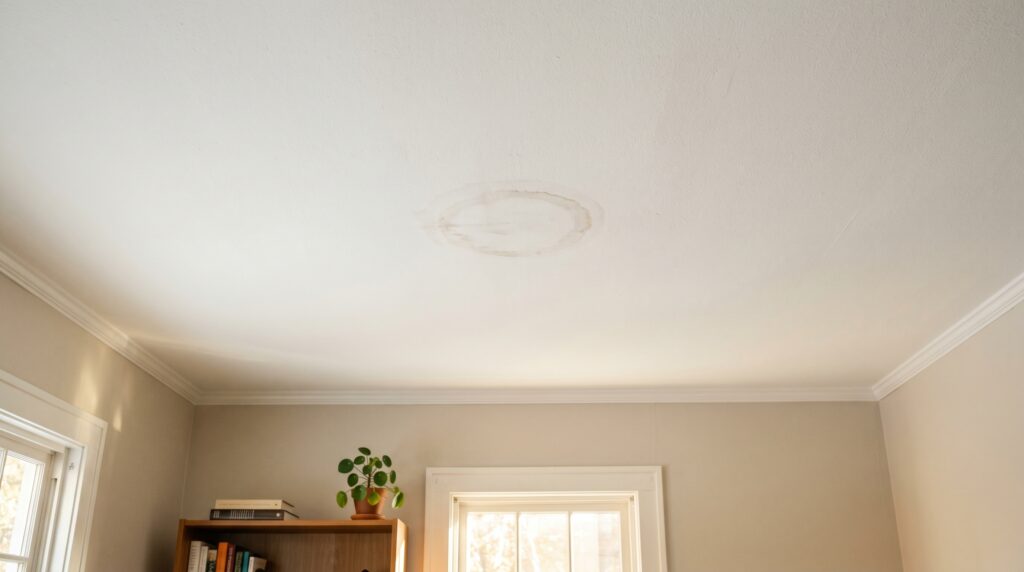
What Causes Brown Stains on Your Ceiling?
Not every ceiling stain is a big deal, but it’s usually a sign that water got in somewhere it shouldn’t have. The question is whether that’s still happening or if it’s something old.
Let’s walk through what that stain actually means and what to do about it.
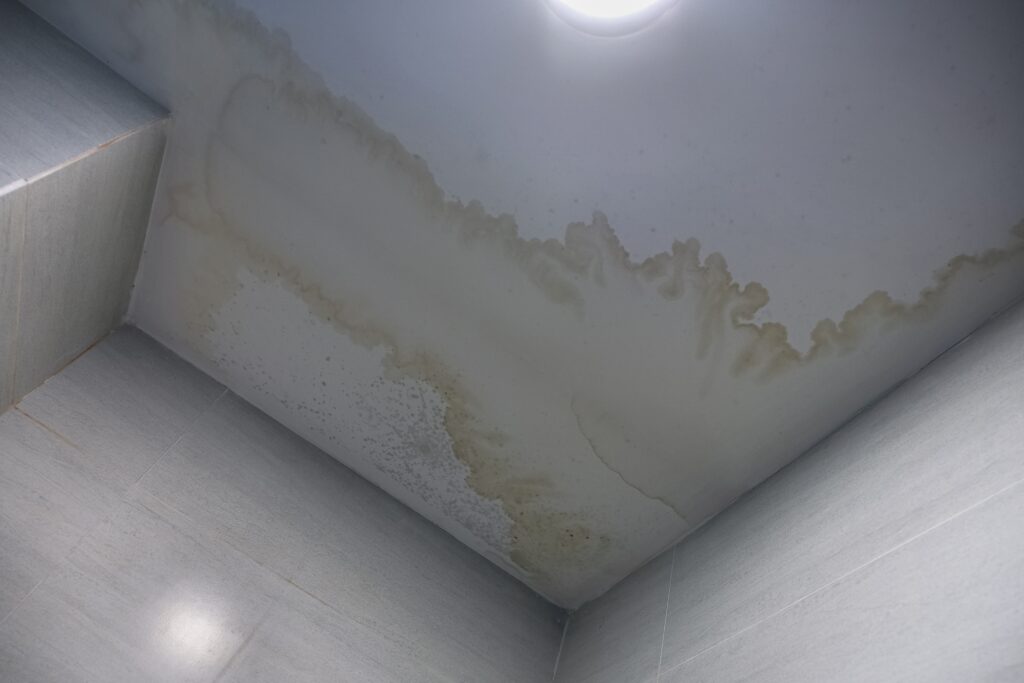
What Usually Causes It
Most ceiling stains come down to one of a few things:
- A roof leak is a common cause if the stain is on a top-floor ceiling or right below the attic. Water gets in through damaged shingles, worn-out flashing, or cracked pipe boots and it can travel a surprising distance along rafters before it finally soaks through.
- A plumbing issue could be the verdict if it is below a bathroom or kitchen. This could be a slow drip from a supply line, a bad wax ring, or a leaking drain. These can look exactly like a roof leak.
- HVAC condensation may be the answer. Your AC produces condensation that’s supposed to drain through a dedicated line but when that line clogs, the water has to go somewhere. Sometimes that is in your ceiling.
- Old water damage is a likely culprit as well. It could be from something that already got fixed. If it hasn’t changed in months and the drywall feels dry and solid, it might just be cosmetic.
How to Tell If It’s Active or Old
This is the question that actually matters. An old, dry stain is just a cosmetic issue. But an active, growing stain is a problem that’s getting worse right now and needs to be fixed.
Touch the stain and notice if it feels soft, spongy, or damp. If thats the case, then there’s active or recent moisture. If it’s hard and dry, it’s likely old.
Keep an eye on it during and after rain. Does the stain get darker, larger, or wetter during or after a rainstorm? That’s a roof leak. Does it change regardless of rain? That points to plumbing or HVAC.
Be sure to look for growth and notice its smell. A musty, earthy smell near the stain suggests mold is developing in the damp space behind the drywall.
If you’re seeing any signs of active moisture, don’t wait. The gap between “small stain” and “significant damage” is shorter than most people realize. The EPA warns that mold growth can begin within 24 to 48 hours of sustained moisture exposure.
Painting Over It
Unfortunately, it is common for people to just paint over a ceiling stain to hide it. However this does nothing to address the root cause.
You must find the source and fix it, otherwise the problem will reoccur.
When That Ceiling Stain Means You Need a Roofer
Not every ceiling stain is a roof problem. But you’ll need a roofer to check it out if any of these apply:
- The stain is on a top-floor ceiling or directly below the attic
- It appeared or grew after heavy rain or a storm
- You can see daylight or feel drafts when you’re in the attic
- Your roof is more than 15–20 years old
- You’ve noticed granules in your gutters, missing shingles, or damaged flashing
At Honest Roofing, our team includes FAA-certified drone pilots who can capture angles a ladder inspection might miss, giving you a clearer picture of what’s going on.
And if it turns out the stain is from plumbing or HVAC then a good roofer will tell you that honestly and point you to the right person.
A proper inspection from a licensed local roofer is the fastest way to turn that nagging worry into a clear plan. Especially in southeastern Pennsylvania, where winter weather does real work on roofs every year, catching problems early saves you serious money down the road.
Address the True Problem
Most of the time, the fix is simpler and cheaper than you’re imagining. These are routine repairs for an experienced roofing crew.
If you’ve got a stain that’s been nagging at you, call or text Honest Roofing at 484.369.0040 or book a free inspection online. We’ll take a look, tell you what we find, and help you deal with it before it becomes something bigger.