
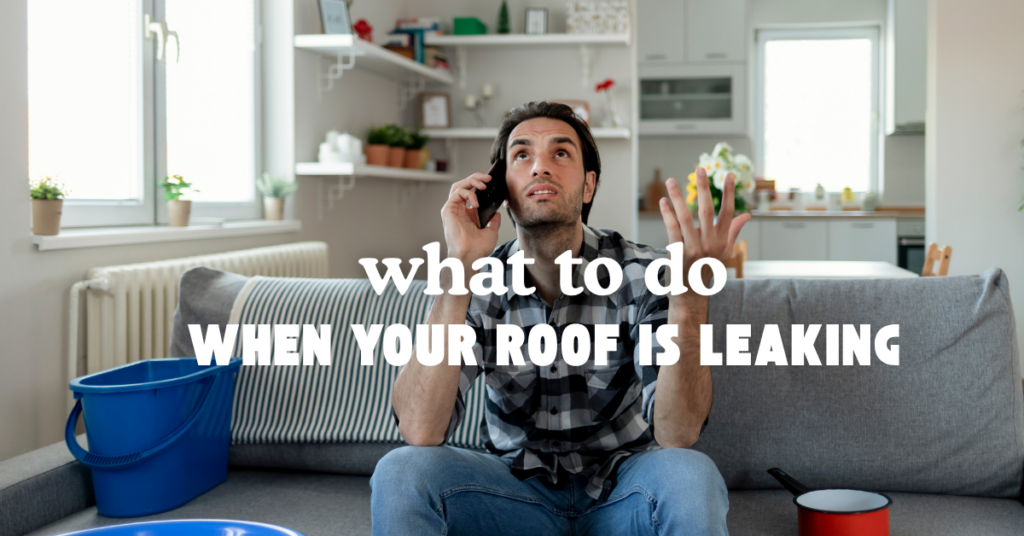
We’ve been on the other end of stressful roofing calls for over 40 years.
First, it’s going to be okay.
A roof leak feels like a huge emergency, but most of the time the damage can be contained and repaired.
Let’s walk through this together.
Contain the Damage Right Now
- Document everything first. Take photos and videos of the leak, the water damage, the ceiling stain, and anything getting wet. This is for your insurance claim. You’ll want to have this.
- Catch the water. Grab a bucket or something similar and place it under the leak to catch dripping water and protect your floors and belongings. Lay towels around the containers to catch splashes.
- Move your valuables. Get electronics, documents, and anything important out of the area.
- If your ceiling is swelling or sagging, it’s holding trapped water. Place a bucket underneath, then poke a small hole at the lowest point of the bulge with a screwdriver. Yes, this feels wrong. It’s the right move. It prevents your ceiling from collapsing under the weight of the water.
- If water is near any electrical fixture like a light, an outlet, or a ceiling fan, head to your breaker box and turn off the circuit for that room. Don’t take chances with water and electricity.
What to Do in the Next 24 Hours
Once you’ve got the immediate situation under control, make two calls.
Call your local roofing company. Look for a licensed, local contractor who can accurately assess the damage, tarp the roof if needed, and give you an honest read on what’s happening.
If you’re in the southeastern Pennsylvania area, you can call or text us at Honest Roofing for emergencies and we’ll get someone out to you. Call or text 484.369.0040 or book online. That’s what we’re here for!
Call your homeowner’s insurance company to report the damage within 24 hours. Your insurer will send an adjuster. Make sure you don’t start permanent repairs before the adjuster visits. Temporary protection like tarping is fine and expected. But hold off on tearing out drywall or replacing shingles until insurance has documented the damage.
Why Roof Leaks Are Worse Than They Look
Water is sneaky and damage is not always visible.
You may think the leak is contained and no longer needs attention, but it’s safer to have an expert check it out. By the time water has reached your floor, it has traveled along rafters, soaked through insulation, and probably been sitting in places you can’t see for days or weeks. A drip in the living room might mean saturated insulation in the attic and wet drywall in the walls.
The US Environmental Protection Agency notes that mold can begin developing within 24 to 48 hours of water exposure. Mold carries serious health risks if left alone and can cost thousands to remediate. A quick assessment from a local roofer can save you that headache.
Safety Reminders
Do not go on your roof to inspect the leak. A wet roof is one of the most dangerous surfaces you can stand on. The Consumer Product Safety Commission tracks thousands of ladder and roof-fall injuries every year.
Don’t try to patch it from outside in the rain. Temporary patches fail when they’re applied to wet surfaces. Wait for dry conditions or let your roofer handle it with a professional tarp.
When Is It a True Emergency?
Not every roof leak requires a same-day crew. Here’s a quick way to gauge it:
Call for emergency service if:
- Water is actively pouring in, not just dripping
- The ceiling is sagging or bulging
- Water is near your electrical panel or fixtures
- A tree or large branch has hit your roof
- Multiple areas of the house are affected
Schedule a prompt inspection if:
- You have a slow, steady drip during rain
- A new stain appeared after recent weather
- The leak seems to stop when the rain stops
We’re Here to Help
With the right roofer, this whole thing can be behind you faster than you think.
Honest Roofing is your local, trusted roofer serving all of southeastern Pennsylvania. If you need someone to take a look at your roof, give us a call at 484.369.0040 or book online.